Why More Women in Toronto Are Starting BJJ

BJJ has historically skewed male, but that's changing fast, and not just in Toronto. Here's why more women are stepping onto the mats, and what actually happens once they do.

It's one of the most effective self-defense skills there is

BJJ is built around the idea that a smaller, weaker person can control and neutralize a bigger, stronger one through leverage and technique, not strength. That's exactly why it's one of the most practical self-defense skills available. Realistic self-defense scenarios often end up on the ground, and BJJ is the art built specifically for that range.

The mats don't care about strength differences

In a lot of fitness spaces, women train around men's strength. In BJJ, technique is the great equalizer. A technically sound blue belt regularly controls a much stronger, much bigger white belt with ease. That dynamic changes how training actually feels, and it's a big part of why so many women stick with it long after their first class.

Community matters, and it shows up fast

Walk into most BJJ gyms and you'll notice something quickly: the culture is built around mutual respect and shared struggle, not ego. Training partners want to see each other improve. That environment tends to build fast, genuine friendships, which is a big reason retention is so high once women get past that first nervous class.

What to actually expect on day one

You'll be paired with training partners who know how to give appropriate resistance for your experience level, never more than you're ready for. Coaches actively supervise every roll. You're never expected to spar full intensity as a beginner, and tapping is normal, expected, and not a big deal to anyone in the room.

You don't need to be strong or flexible to start

This is the myth that keeps most beginners, women and men both, from ever trying their first class. BJJ builds strength and flexibility over time. You don't need either walking in the door.

Come Try It Yourself

The best way to understand what BJJ actually feels like is to step on the mats. Your first class at The Academy is free, no pressure, no obligation.
Claim Your Free Trial Class →

Is Private BJJ Coaching Worth It? What 1-on-1 Training Actually Adds

Group classes are where most of your training happens, and that's exactly how it should be. But there's a reason serious students eventually add private instruction into the mix. Here's what it actually does for your game.

Group classes teach the art. Private lessons teach you.

In a group class, your coach is managing a room. Even the best instructors can't watch every detail of your individual game in a 60-minute class with a dozen or more students. A private lesson flips that completely. Every minute is about your specific habits, your specific gaps, your specific goals.

What private instruction actually fixes

  • A recurring mistake you can't seem to shake, the kind that needs a coach watching you specifically, not the whole room

  • A single position or sequence you want to genuinely master, not just understand

  • Competition prep, where the details that separate winning and losing get real attention

  • Building confidence before jumping into your first live rolls or your first tournament

It's not just for beginners, and it's not just for competitors

Some of the most common private lesson requests come from people in the middle of their journey, past the beginner stage but stuck on a specific gap that group class pace doesn't address fast enough. Others are competitors sharpening a game plan for an upcoming tournament. Both get real value out of it.

Semi-private sessions

If the cost of one-on-one time is what's holding you back, private classes can be split between two students. You still get individualized coaching, at a lower cost per person, and a training partner who's working through the same material with you.

Flexible location

Private sessions can be arranged in-house at The Academy or off-site, depending on what works for your schedule.

Is It Right for You?

If you've hit a plateau in group class, or you're prepping for a competition and want a real game plan, private instruction is worth the investment. Reach out and we'll help you figure out the right fit.

Ask About Private Instruction →

Adult Gymnastics: The Training Tool Most Grapplers Are Missing

Ask most adults about gymnastics and they picture something they gave up on, or never tried, as a kid. At The Academy, our Adult Gymnastics program isn't about perfect form on a balance beam. It's about building the body control that makes every other art you train better.

Why gymnastics carries over to grappling

BJJ, Judo, and wrestling all demand things most people never train directly: body awareness, rotational control, the ability to fall safely, the strength to move your own bodyweight through space. Gymnastics builds exactly that. It's not a coincidence that some of the best scramblers and most explosive athletes in grappling have a gymnastics background somewhere in their history.

It's not about being flexible already

The biggest misconception keeping adults away is thinking they need to already be flexible or athletic to start. You don't. Mobility and body control are trainable skills, not fixed traits. You build them the same way you build anything else in this gym: by showing up consistently.

Led by Coach Cyrus Darius

Our Adult Gymnastics program is led by Coach Cyrus Darius, who also heads our wrestling program as a member of the Iranian National Wrestling Team. That combination matters. Cyrus understands exactly which gymnastics fundamentals translate directly into grappling performance, because he's lived that transfer himself at an elite competitive level.

Who benefits most

  • Grapplers who want better scrambles, better falls, and more explosive movement

  • Anyone who wants to move better in daily life, not just on the mats

  • Adults who never had access to gymnastics training as kids and want to build it now

  • Athletes cross-training from other sports who need better body awareness

What a class actually looks like

Expect work on rolling, balance, strength through range of motion, and controlled falling, all scaled to where you're starting from. Nobody is thrown into a back handspring on day one. Progress here is built the same deliberate way it's built everywhere else at The Academy.

Try It for Yourself

Come feel the difference real body control makes in your training. Your first class is free.

Claim Your Free Trial Class →

BJJ vs. Sanda Kickboxing: Should You Train Standup or Ground First?

Two of the most popular programs at The Academy are Brazilian Jiu-Jitsu and Sanda Kickboxing, and new members ask us the same question constantly: which one should I start with? The honest answer is that it depends less on the "better" art and more on what kind of training you're actually looking for.

BJJ: the thinking person's grappling art

BJJ happens on the ground. It's about position, leverage, and technique over raw strength, which is exactly why it's one of the most accessible combat sports for any age or body type. Sessions are technical and methodical. You'll spend real time drilling before you ever roll live, and progress is measured in small, earned wins: a new sweep, an escape you finally understand, a submission you land for the first time.

Sanda: standup with an edge

Sanda blends striking with clinch work and throws, which makes it more dynamic and demanding than most standard kickboxing styles. You're not just trading strikes, you're managing distance, angles, and balance the whole time. It rewards people who like to stay moving and think on their feet, literally.

Both are taught by the same head coach

Our head coach across every program is Sifu Justin Chin, a BJJ black belt and Sanda kickboxing coach who has spent his life training and competing in both. Justin also teaches our No-Gi BJJ/MMA class and recently qualified for the JJIF World Championships in Croatia, so this isn't theory for him. He trains and competes at the level he coaches.

On the BJJ side, our kids and gi program is led by Sensei Steve Bell, whose coaching has helped students earn their belts through real, tested progress, not time served on the mats.

How to actually decide

  • If you like puzzles, patience, and technical problem-solving, start with BJJ

  • If you like staying on your feet and want a faster-paced, higher-output class, start with Sanda

  • If you're training for self defense specifically, both matter, standup range and ground range solve different problems

  • If you genuinely can't decide, that's the best sign to try both

You Don't Have to Choose

A lot of our most well-rounded members train both. Come try a free class in either program, or both, and let the training decide for you.

Claim Your Free Trial Class →

Why Wrestling Might Be the Missing Piece in Your Grappling Game

Ask any high-level grappler what art built the foundation of their game, and wrestling comes up constantly. It's not flashy, and it doesn't get the same spotlight as BJJ or Judo, but it might be the single most underrated program at The Academy.

What makes wrestling different

Wrestling is relentless. It's about controlling a resisting opponent through takedowns, top pressure, and sheer positional dominance, with no gi to grip and nowhere to hide. That lack of a uniform to hold onto forces a different kind of grip fighting and control than Judo or BJJ, and it builds a level of physical conditioning that's hard to replicate anywhere else.

Why it matters for your grappling

If you've ever rolled with someone who has a wrestling background, you already know the difference. Their top control feels different. Their takedowns are relentless. Wrestlers bring a base of explosive power and positional pressure that elevates every other art they cross-train.

Led by Coach Cyrus Darius

Our wrestling program is led by Coach Cyrus Darius, a member of the Iranian National Wrestling Team with extensive competition experience at the highest level. Training under someone who's competed internationally means you're learning from someone who has tested this style under real pressure, not just taught it. Coach Tristan Nurse rounds out the program, bringing his own competition background to help build our wrestlers from the ground up.

Who should train wrestling

  • Grapplers who want elite takedowns and top control

  • Anyone chasing serious conditioning, wrestling is one of the most demanding workouts in combat sports

  • MMA-minded athletes who need a complete standup-to-ground transition

  • Beginners who want to build explosive athleticism fast

What to expect in class

Wrestling classes at The Academy focus on stance, motion, and takedowns first, building into live scrambling once the fundamentals are solid. It's demanding. It's also one of the fastest ways to see real conditioning gains in your first month of training.

Try a Class

You don't need a wrestling background to start. Come try a free class and feel the difference wrestling adds to your grappling.

Claim Your Free Trial Class →

Judo in Toronto: The Standup Grappling Art Everyone Overlooks

Most people who walk into The Academy already know what BJJ is. Fewer know what Judo actually teaches, or why it's worth training even if ground fighting is your main goal. Here's the case for starting on your feet.

What Judo actually is

Judo is built around throws, off-balancing, and controlling an opponent while both of you are standing. The name translates to "the gentle way," which sounds counterintuitive until you understand the principle behind it: using an opponent's own momentum and balance against them, instead of overpowering them with strength.

Why it matters even if you train BJJ

A huge percentage of real grappling exchanges start standing up. If your only tools are for the ground, you're missing the first phase of almost every fight. Judo gives you a way to get the fight to the ground on your terms, safely and with control, instead of just pulling guard or waiting to see what happens.

Led by Sensei Taras Shatko

Our Judo program is led by Sensei Taras Shatko, a black belt with real competition experience who brings a genuine respect for the traditional roots of the sport into every class. His coaching style balances the discipline and etiquette Judo is known for with practical, modern instruction that actually translates to the mats.

Who should start with Judo

  • Anyone who wants to round out a ground-focused grappling game with real standup skill

  • Beginners who like structure and traditional martial arts culture

  • Wrestlers looking to add throws and grip fighting to their toolkit

  • Parents looking for a discipline-forward program for their kids

What a class looks like

Expect footwork drills, grip fighting, and throw technique broken down step by step before you ever try it live. Falling safely (ukemi) is one of the first things you'll learn, and it's a skill that carries over into every other grappling art you train.

Try It for Yourself

You don't need any experience to start. Come to a free trial class with Sensei Taras and see what standup grappling adds to your game.

Claim Your Free Trial Class →

Kids Martial Arts Toronto: How BJJ Builds Confidence and Discipline

If you’re a Toronto parent looking into martial arts for your kid, you’ve probably had the same worry every parent has: is this going to make my kid more aggressive? With Brazilian Jiu-Jitsu, it’s actually the opposite.

It’s not about fighting

BJJ is a grappling art, not a striking art. Kids aren’t throwing punches or getting hit. They’re learning leverage, problem-solving, and body control. The physical part looks intense, but it’s controlled, coached, and age-appropriate every step of the way.

Confidence that actually transfers

The confidence a kid builds on the mats doesn’t stay on the mats. Kids who train BJJ learn to stay calm under pressure, work through a hard position instead of giving up, and trust themselves. That shows up at school, with friends, and at home.

Discipline without the yelling

There’s no yelling in our kids classes. Discipline here means showing up, listening, and putting in the work, and kids pick that structure up fast because the whole room is doing it together, from four-year-old white belts to adult black belts training right alongside them.

Real self-defense, taught responsibly

Every parent’s real question is usually about safety. BJJ gives kids the tools to protect themselves if they ever need to, without ever teaching them to be the aggressor. Coaches are explicit about when and how those skills should be used.

Ready to try a class? Bring your kid in for a free trial class at The Academy Toronto and see the culture for yourself before you decide anything.

Sanda Kickboxing 101: Toronto's Most Underrated Combat Sport

Ask most people in Toronto about kickboxing and they’ll picture the style they’ve seen in a typical gym. Sanda is different, and it’s one of the best-kept secrets in the city’s combat sports scene.

What is Sanda, exactly?

Sanda is a modern Chinese combat sport that blends striking with clinch work and throws. Unlike most Western kickboxing styles, Sanda allows takedowns from the clinch, which means you’re not just trading strikes, you’re managing distance, angles, and balance the entire fight.

Why it’s different from traditional kickboxing

Traditional kickboxing is strikes only. Sanda adds a wrestling and throwing element on top of the striking, which makes it a more complete, more demanding sport. It rewards athletes who can think on their feet, literally.

Taught by a Sifu who’s lived it

Our Sanda kickboxing program is led by Sifu Justin Chin, a lifelong martial artist who grew up training Kung Fu before building his career around kickboxing and grappling. His approach blends discipline, technical precision, and real fight IQ.

Who should try it

If you want a striking style that’s more dynamic than standard kickboxing, or you’re a grappler looking to round out your standup game, Sanda is worth your time. It’s demanding, but every class builds real skill you can feel.

Curious what a class feels like? Come try Sanda kickboxing for free at The Academy Toronto in Midtown.

How Much Does BJJ Cost in Toronto? A Real Breakdown

One of the most common questions we get before someone ever steps on the mats is simple: how much is this going to cost me? Here’s a straightforward answer.

Membership pricing

BJJ memberships in Toronto typically run on a monthly basis, and pricing varies depending on how many classes per week you want access to. At The Academy, we keep our pricing transparent, no hidden fees, no long-term contracts you can’t get out of. Come in for a free trial and we’ll walk you through the exact numbers for your goals.

What about gear?

You don’t need to buy anything for your first class. Once you decide to stick with it, you’ll eventually want a gi (uniform) for Gi classes, and a rashguard and shorts for No-Gi. Entry-level gear is affordable and lasts a long time if you take care of it.

You’re not just paying for mat time

A membership at The Academy also gives you access to a complete fitness facility hosted by Striation 6, so you’re not just training BJJ, you’ve got a full gym at your fingertips too. That alone is worth comparing against what you’d pay for a standalone gym membership.

What you’re really paying for is coaching

Here’s the thing nobody tells you: you cannot learn BJJ on your own. There’s no YouTube video or app that replaces a coach who can see what your body is actually doing and correct it in real time. Our coaches have put in years, sometimes decades, of training to be able to teach technique correctly and safely. That expertise is the actual product. Anyone can roll out a mat. Not anyone can teach you how to use it.

Is it worth it?

Compare it to almost anything else, personal training, a standalone gym membership, therapy, and BJJ tends to hold up. You’re getting expert coaching, a full fitness facility, real self-defense skills, and a community, all in one membership.

Want the exact numbers? Come in for a free trial class and we’ll give you a straightforward breakdown with zero pressure.

Judo vs. BJJ vs. Wrestling: Which Grappling Art Is Right for You?

Toronto has plenty of gyms that teach one grappling art. We teach all three under one roof, and we get asked constantly: what’s actually the difference, and which one should I start with?

Judo: throws and control

Judo is built around throws, takedowns, and off-balancing your opponent, standing up. If the idea of throwing someone to the ground and controlling the fight from the feet sounds appealing, Judo is your starting point.

Brazilian Jiu-Jitsu: the ground game

BJJ picks up where Judo often leaves off, once you’re on the ground. It’s about position, leverage, and submissions. Size and strength matter far less than technique, which is why it’s one of the most accessible combat sports for any age or body type.

Wrestling: control and conditioning

Wrestling is relentless control, takedowns, and top pressure. It builds a level of physical conditioning and grit that carries directly into both Judo and BJJ. A lot of the best grapplers in the world have a wrestling base.

So which one is right for you?

Honestly, most serious grapplers end up training more than one. Judo sharpens your standup, wrestling builds your control and conditioning, and BJJ rounds out your ground game. That’s exactly why we built The Academy around all three, so you’re not stuck choosing.

Not sure where to start? Come to a free trial class and our coaches will help you figure out the right fit based on your goals.

Best BJJ Gym in Toronto for Beginners: What to Expect Your First Month

If you’ve been thinking about trying Brazilian Jiu-Jitsu in Toronto but haven’t pulled the trigger yet, here’s what you need to know: showing up for your first class is the hardest part, and it’s also the biggest win. Everything after that gets easier.

Your first day

When you walk in for your first class, you’ll be met by your coach. They’ll walk you through exactly what to do, no guesswork required. BJJ can look intimidating from the outside, but there’s no need to feel that way once you’re actually here. Every single person on the mats, including the most advanced black belts, started exactly where you are right now. We leave our egos at the door. That’s not a slogan, it’s how the room actually operates.

You’ll take it slow, on purpose

Your coach isn’t going to throw you into anything you’re not ready for. You’ll start with the basics: fundamental positions, how to move, how to stay safe. Once you and your coach feel comfortable, you’ll get the chance to try live sparring. When that day comes, you’ll be paired with a higher-ranked partner who goes light with you. You get real reps and a real feel for what a more experienced practitioner can do, without any pressure to perform.

Safety is the priority, always

The Academy Toronto is a family-friendly gym, and keeping everyone safe on the mats comes before anything else. You don’t need to worry about getting thrown into a bad spot. You just need to keep showing up.

You don’t need to be in shape to start

This is one of the biggest myths that keeps people from trying BJJ: you don’t need to get in shape first. You get in shape by training. Your only job on day one is to show up with an open mind.

Progress happens faster than you think

Give it a month, and you’ll already notice a difference, more comfortable, more capable, starting to build real confidence in what you know. Give it six months, and you’ll be the one welcoming a nervous beginner on their first day, remembering exactly how that felt. It’s all about consistency. Show up for your classes, and the progression takes care of itself.

Nobody walks in already knowing what they’re doing. That’s the whole point. If you have any questions before or during class, your coach is always there to walk you through it.

Ready to take the first step? Come try a free class at The Academy Toronto and see what BJJ, Judo, Wrestling, and Kickboxing training in Toronto is really like.

Sifu Justin Chin Qualifies for the JJIF World Championships in Zadar, Croatia

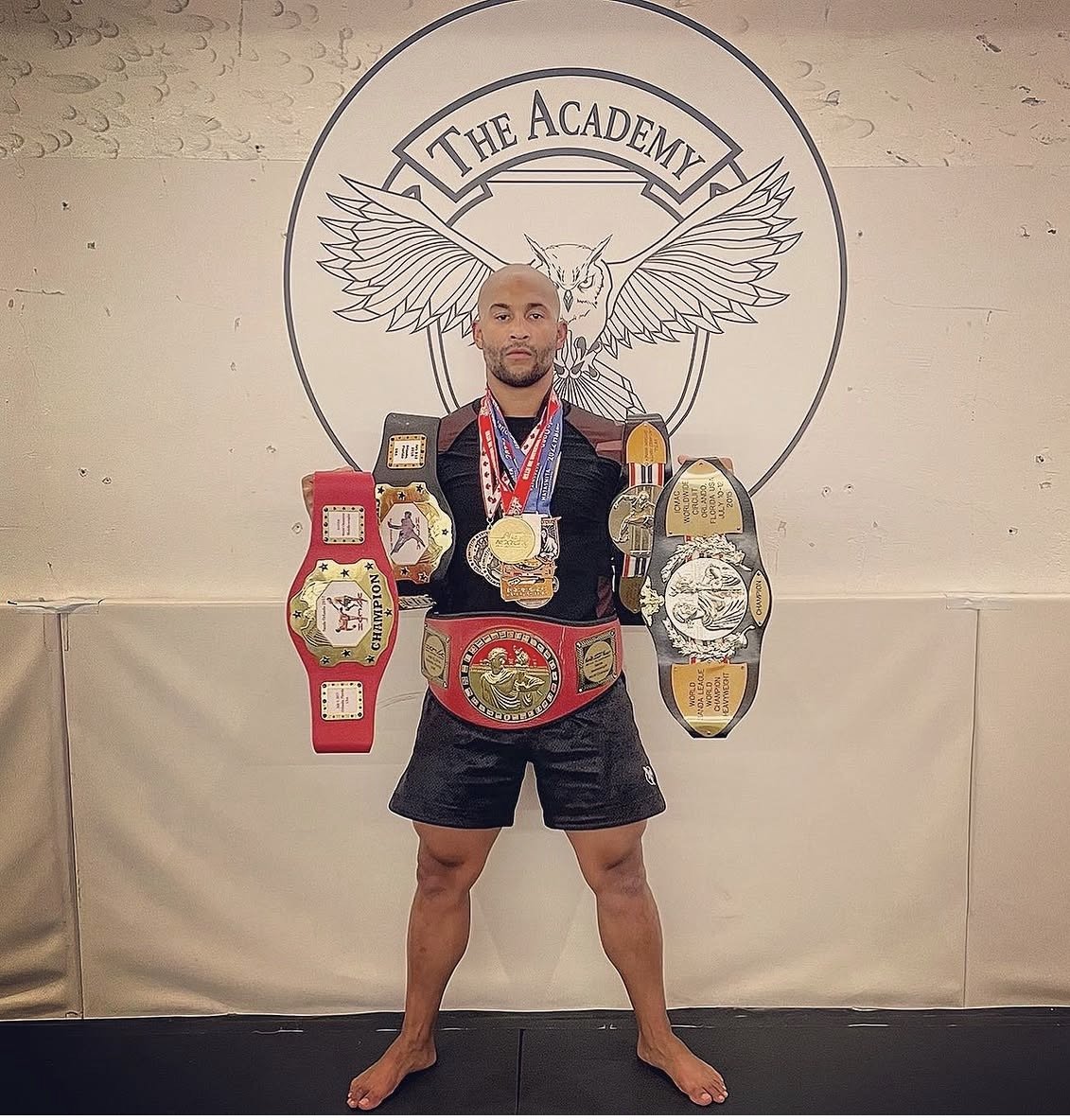
Big news out of The Academy Toronto: Sifu Justin Chin has officially qualified for the JJIF Jiu-Jitsu World Championships, taking place August 21-23 in Zadar, Croatia. Justin will be representing Canada on the world stage, and representing our gym while he does it.

Justin isn’t just one of our coaches, he’s one of the founders of The Academy. He started this gym with zero members and took a real risk building it from the ground up. Years later, that risk has turned into a program with incredible fighters coming up through the ranks, a genuine lineage of Sanda kickboxers, and a growing list of MMA fighters coached out of our gym who are making a name for themselves.

Justin is a black belt in Brazilian Jiu-Jitsu and a Sifu in Sanda kickboxing, and he teaches our No-Gi Jiu-Jitsu/MMA class here at The Academy in Midtown Toronto. He’s been a martial artist his whole life, starting with Kung Fu as a kid before finding his way into grappling and kickboxing, and that lifelong foundation shows in how he coaches: calm, technical, and genuinely invested in every student who walks through our doors.

What makes this qualification even more impressive is what Justin balances to get there. He has a full-time job. He’s a husband and a father to twin daughters. And he still finds the time, and the discipline, to train at a level that earns a spot representing his country at Worlds. If you’ve ever told yourself you don’t have time to train, Justin’s story is a pretty good argument against that excuse.

Here’s how you can help. Justin needs training partners to get fight-ready before he leaves for Croatia. Come to our open mats, every Saturday at 12pm, and give him good competitive rounds. Every round matters when you’re getting ready for Worlds.

We’ll be sharing updates as the competition gets closer. Follow along on our Instagram and check back here on the blog.

Congratulations, Justin. Go represent Canada, and represent The Academy.